
Update Your Pool Chemical Schedule for Spring Weather in Southern Utah

Spring in Southern Utah brings a mix of warm sunshine and cool nights. These temperature swings affect your pool’s water chemistry, making it essential to adjust your chemical schedule. Without regular testing and proper chemical balance, your pool can quickly develop cloudy water, algae growth, or skin irritation. This guide explains how to keep your pool clean, clear, and balanced as the season changes.
Why Spring Weather Affects Pool Chemistry
Southern Utah’s spring weather is unpredictable. Daytime temperatures can climb into the 70s or 80s, while nights may drop to the 40s or 50s. These fluctuations impact three key water chemistry factors:
pH levels: Warmer water speeds up chemical reactions, often causing pH to rise.
Alkalinity: Changes in temperature and rain can dilute or concentrate alkalinity.
Sanitizer levels: Chlorine breaks down faster in warmer water and under sunlight.
If these factors are not monitored and adjusted, your pool water can become unbalanced. High pH can cause cloudy water and scaling, while low sanitizer levels allow bacteria and algae to grow.
Test Your Water Regularly
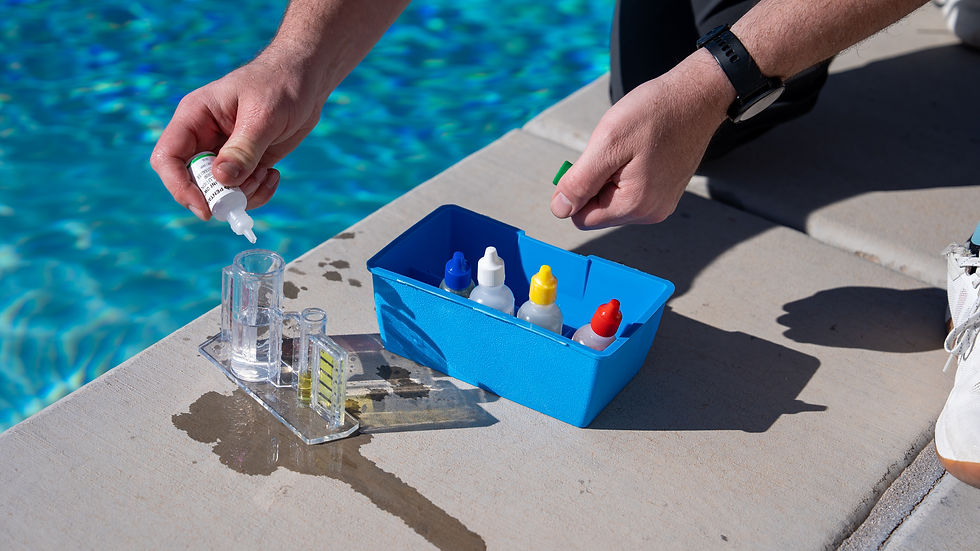
Testing your pool water is the first step to maintaining balance. During spring, test your water at least twice a week. Use a reliable test kit or strips to check:
pH level (ideal range: 7.2 to 7.6)
Total alkalinity (ideal range: 80 to 120 ppm)
Free chlorine (ideal range: 1 to 3 ppm)
Cyanuric acid (stabilizer) level (ideal range: 30 to 50 ppm)
Record your results to track trends. If pH or alkalinity drifts outside the ideal range, adjust your chemicals accordingly.
Adjust Your Pool Chemical Schedule
Spring requires more frequent chemical adjustments than summer or winter. Here’s how to update your schedule:
pH control: If pH rises above 7.6, add a pH reducer (muriatic acid or sodium bisulfate). If it falls below 7.2, add a pH increaser (sodium carbonate).
Alkalinity adjustment: Use sodium bicarbonate to raise alkalinity if below 80 ppm. To lower alkalinity, add acid carefully.
Chlorine maintenance: Increase chlorine dosage on warmer days or after heavy pool use. Use stabilized chlorine tablets or granules to maintain consistent sanitizer levels.
Shock treatments: Shock your pool weekly or after heavy rain to kill bacteria and algae spores.
Adjust chemicals gradually and retest after 24 hours to avoid overcorrection.
Stabilize Your Chlorine
Chlorine breaks down quickly in sunlight, especially during bright spring days. Cyanuric acid acts as a stabilizer, protecting chlorine from UV rays. Make sure your cyanuric acid level stays between 30 and 50 ppm. If it’s too low, chlorine will dissipate rapidly. If it’s too high, chlorine effectiveness decreases.
Using stabilized chlorine products helps maintain sanitizer levels longer. Consider adding chlorine tablets to your pool’s skimmer or floater for steady release.
Manage Pool Water Temperature
While you cannot control outdoor temperatures, you can monitor your pool water temperature. Warmer water increases chemical activity and chlorine consumption. Use a pool thermometer and adjust chemical doses accordingly.
If temperatures rise above 80°F, increase chlorine levels slightly to prevent algae growth. Cooler nights may slow chemical reactions, so avoid over-treating your pool.
Prevent Common Spring Pool Problems
Spring weather can cause specific pool issues. Here are tips to avoid them:
Algae blooms: Keep chlorine levels steady and shock weekly.
Cloudy water: Balance pH and alkalinity, and clean filters regularly.
Scaling: Maintain pH below 7.6 to prevent calcium buildup on pool surfaces.
Skin irritation: Balanced water reduces redness and itching.
Regular brushing and vacuuming also help keep your pool clean.
Final Tips for Southern Utah Pool Owners
Test water early in the morning or late evening when temperatures are stable.
Keep a log of chemical levels and treatments.
Use pool covers on cool nights to reduce temperature swings and chemical loss.
Schedule professional pool service if you notice persistent water issues.
Updating your chemical schedule for spring weather protects your investment and ensures a refreshing swim all season.


Comments